These are bamboo species
from the higher elevations of the Andes, Central America
or the Himalayan regions of India and China. Many of these
species are fairly recent introductions and have not been
trialed in all areas of the USA. All seem to do quite well
along the West coast. Some do well in the Midwest and
Middle Atlantic region.
The bar below lists our nursery price. Pink price means we are out. Go to SHIPPING for mail order information and cost.
The bar below lists our nursery price. Pink price means we are out. Go to SHIPPING for mail order information and cost.
|
BAMBOO NAME |
NOTE |
1 GAL |
2 GAL |
3 GAL |
OTHER |
| Borinda
albocera
(smaller form) |
|
$32 | $42 |
$75 |
growing thus retaining at petit size for pots or small gardens.
1) 1/2 2) 15' 3) .5"-75" 4) 15 F 5) 8-10 6) C - (follows same order in all descriptions below...)
| Borinda
albocera
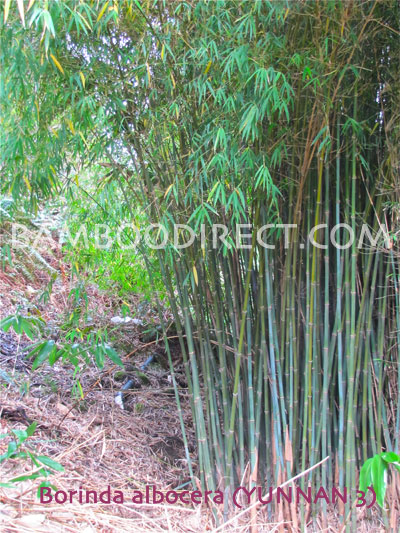
(Yunnan 3)(Larger form) |
BIG |
$40 | $65 | $95 |
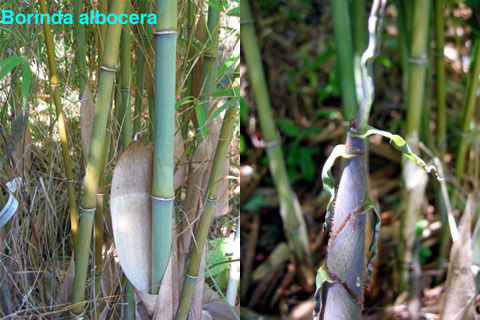
the "blue" culm look. Nodes have a unique soft rubbery ring around the ridge and culms with fine
striated ridging noticable to the touch. Striking upright form. A large plant. May be a new species or a
hybrid. Fast grower!
1) 1/2 2) 26' 3) 1"-1.25"" 4) 10 F 5) 8-10 6) C
| Borinda angustissima (Fargesia angustissima) | |
$32 | $42 |
$75 |
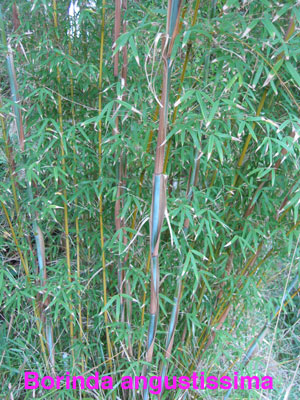
attractive appearance. A tall grower.
1/2 20' 1" 10 F 7-10 C
| Borinda
boliana
(syn. Yushania Boliana) |
|
$32 | $42 |
$75 |
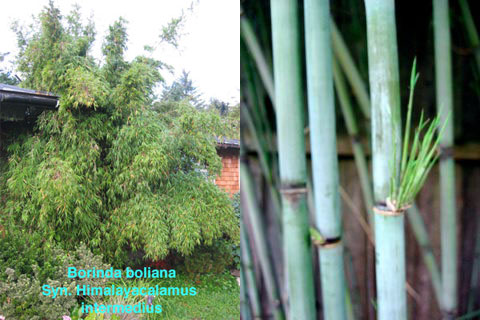
in China. It came here via the Fuji Bamboo Gardens in Japan. Has pale blue culms. We seem to have the
only flowering one in the country. Reaches large size quickly. It has become a personal favorite!
1/2 18' 3/4" 10 F 7-10 C
| Borinda contracta | BIG |
$32 | $42 |
$75 |
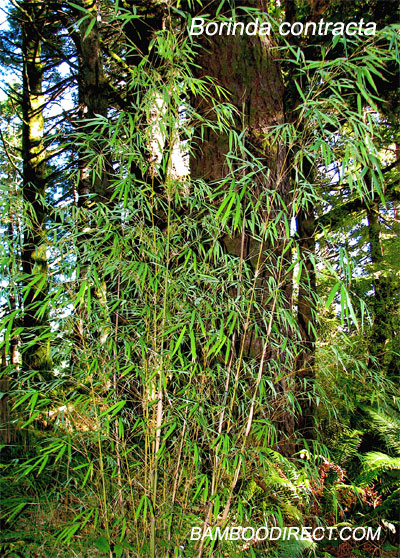
1/2 15' .75" 15 F 8-10 C
| Borinda fungosa (syn. - Fargesia fungosa) | |
$32 | $42 |
$75 |
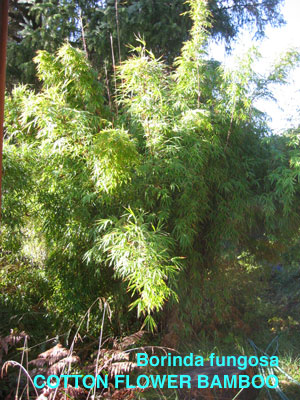
hardiness. Is used for weaving. Beautiful against a dark background. Nice looking under trees. Rhizomes
have survived near zero temperatures of an occasional cold snap however, the top was killed.
1/2 20' 1" 10 F 8-10 C
| Borinda
lushuiensis
(Yunnan 4) |
|
$50 | $75 | $110 |
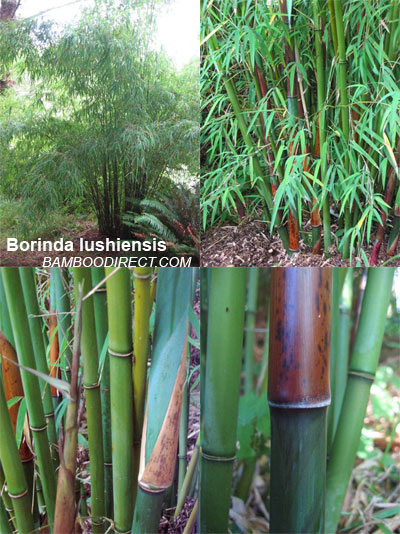
make this the landscaper's pick under tall trees. Fast grower!
1/2 26' 1.5" 15 F 8-10 C
| Borinda macclureana (KR in 1995, 1997, 1999) | OUT |
$32 | $42 |
$75 |
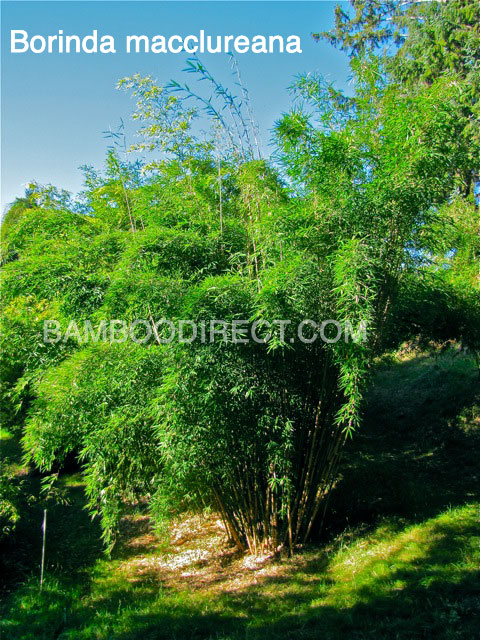
multiple branches. Found at elevations up to 11,000 ft. this ought to be in the prime hardiness category.
New introduction.
1/2 26' 1.25" 10F 7-10 C
| Borinda papyrifera (Stapleton 1046) | FEW |
$75 | $110 |
lush foliage and large culms that produce culms that are thick and hard, good to craft with.
1/2 26' 1.3/4" 10F 8-10 C
| Borinda perlonga (Yunnan 6) | $40 |
$65 | $95 |
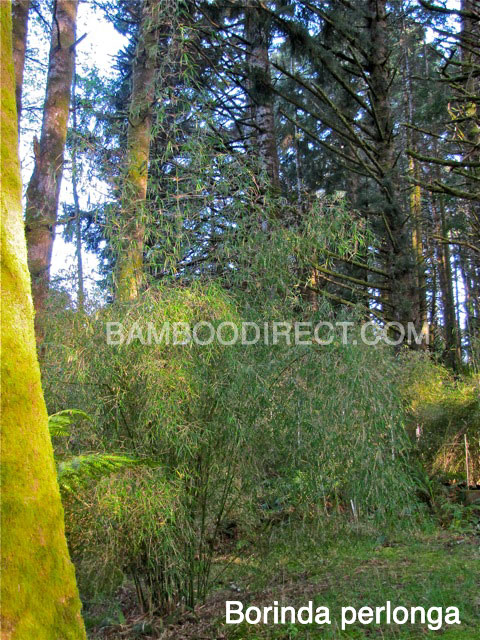
with arching and curling downward culm tips.
1/2 20' 1.25" 15 F 8-10 C
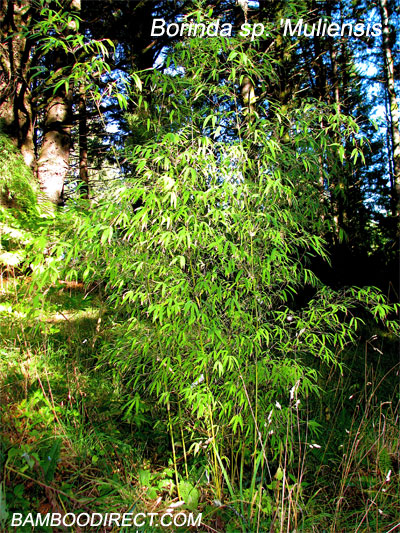
| Borinda sp. 'Muliensis' | OUT |
|
$45 | $65 |
Evergreen on the Pacific Coast where it thrives.
1/2 10' .5" 10 F 8-10 C
| Borinda yulongshanensis (KR4206) | $32 | $42 |
$75 |
bamboo. Cool weather darkens the culm and sheaths to a purple haze. Sheaths feel rubbery when moist.
New introduction.
1/2 16' .75" -20F 5-10 C
| Chimonocalamus pallens | |
$32 | $42 |
$75 |
dark purple sheaths. In flower as of 2011. 1 gal. seedlings available now.
sun-1/2 25' 1 1/2" 10 F 8-10 C
| Chusquea andina 'Blue Andes' | |
$38 | $70 | $95 |
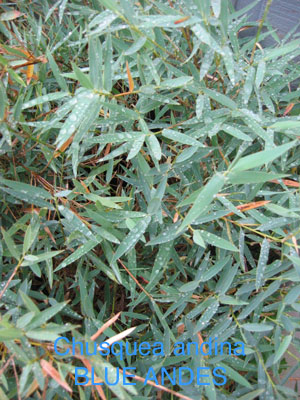
be one of the hardiest of South American Bamboos.
sun 12' 1" 0 F 7-10 C
| Chusquea bilimekii | |
$62 | $85 | $120 |
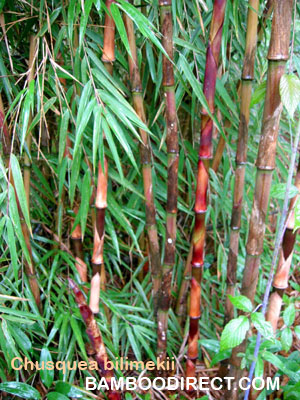
Mexican expedition. It grows at 9000' in the pine forest of the Sierra Occidental. The leaves are
longer and narrower that C. culeou species. Hardiness is not known. The best guess is 10 F.
1/2-shade 18' 1" 10 F 8-10 C
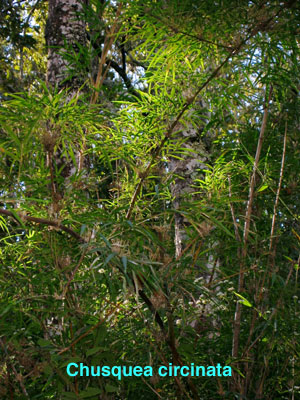
| Chusquea circinata | $38 | $70 | $75 |
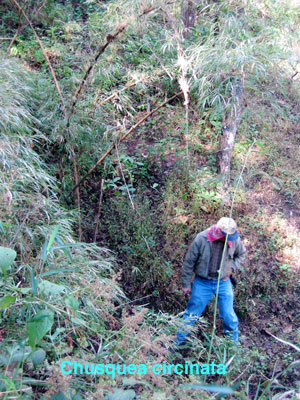
Dark colored arching canes with whorls of small leaves. Delicate looking.
sun-1/2 22' 1" 24 F 9-10 C
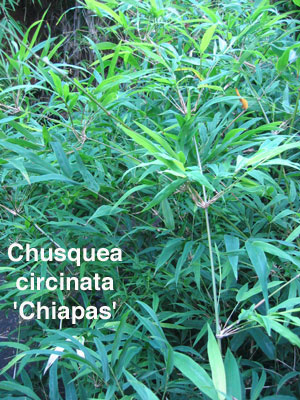
| Chusquea circinata 'Chiapas' | OUT |
$62 | $85 |
early 1990's resulted in fewer than 100 seedlings. These have been dispersed around the West Coast.
The plant has been verified as Chusquea circinata by Dr. Lynn Clark and Gilberto Cort�s. Nice arching
culms are segmented into whorls of slightly larger leaves. In winter the new shoot tips and leaves are
creamy colored.
1/2 10' 1/2" 26 F 9-10
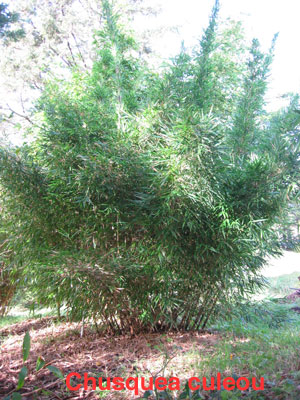
| Chusquea culeou | |
$38 | $42 | $70 |
nodes. Several varieties and cultivars are available. Excellent wood with solid culms. Good for building
furniture, tool handles and hoop greenhouses.
sun-1/2 20' 1 1/4" 0 F 7-10 C
| Chusquea culeou 'Aisen' | |
$38 | $42 | $70 |

The 'Aisen' variety is a tall and hardy type from Southern Chile. These are the seedlings from a
colleague's plant that flowered in 2012. Excellent wood with solid culms. Good for building
furniture, tool handles and hoop greenhouses.
sun-1/2 20' 1 1/4" 0 F 7-10 C
| Chusquea culeou 'Argentina' | |
$38 | $42 | $70 |
their Chilean cousins. Sometimes identified as Chusquea argentina.
sun-1/2 15' 1 1/4" 0 F 7-10 C
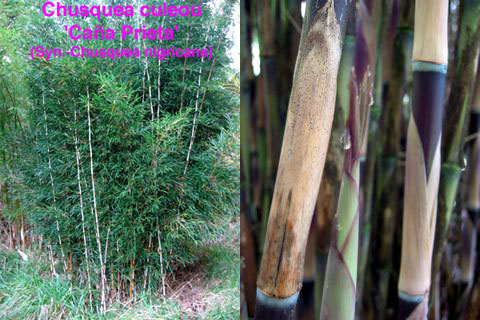
| Chusquea culeou 'Ca�a Prieta' (flowering 2019) | $38 | $42 | $70 |
Stiff dark green erect leaves on dark culms. Culms are dark enough to be almost "Black". Grows
naturally in bogs and wet areas. It is called "Ca�a Prieta" in the trade.
sun-1/2 15' 1" 0 F 7-10 C
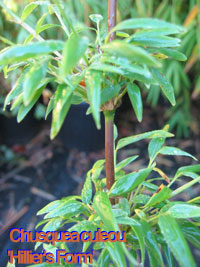
| Chusquea culeou 'Hillier's Form' | |
$38 | $62 | $70 | |
some other species. Came from seeds collected in Hillier's Botanical Garden, England.
sun-1/2 10' 3/4" 0 F 7-10 C
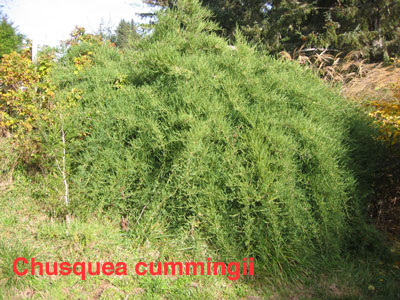
| Chusquea cumingii | FEW |
|
$70 | $100 |
when touched. A very interesting and lovely shrub bamboo. Cascades nicely on steep slopes.
sun 10' 3/4" 10 F 8-10 C
| Chusquea foliosa | FEW |
$62 | $90 | $120 | |
found in several species of Chusquea. Pretty reddish new shoot.
1/2 20' 1 1/2" 24 F 9-10 C
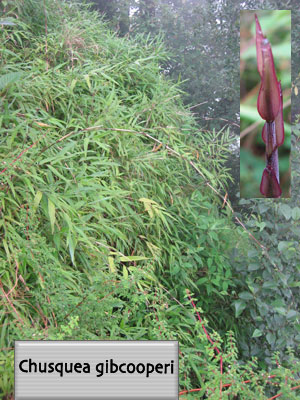
| Chusquea gibcooperi | BIG |
$85 |
culms. It has a fairly vigorous spreading and clambering habit. (formerly Ch. sp. 'las Vigas')
sun-1/2 8' .5 20 F 9-10 R
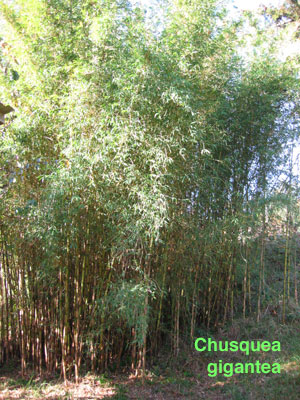
| Chusquea gigantea (flowering 2019) | $38 | $62 | $70 |

A nice hardy clumping bamboo from the cooler part of Chile and the Andes Mountains. Grows in a stiff
vase shape. New shoots are shades of red or pink.
sun 22' 1 1/4" 0 F 7-10 C (large footprint)
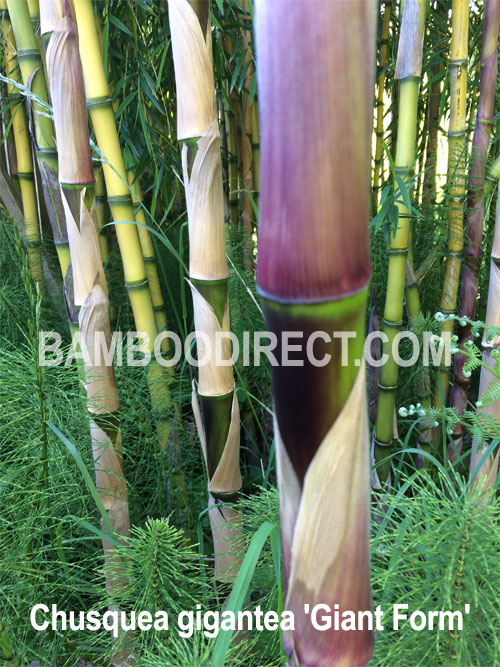
| Chusquea gigantea 'Giant Form' (flowering 2019 | $38 | |

Chusqueas. Light colored internodes with dark green nodes. Excellent wood with solid culms. Good for
building furniture, tool handles and hoop greenhouses.
sun-1/2 25' 1 3/4" 0 F 7-10 C (large footprint)
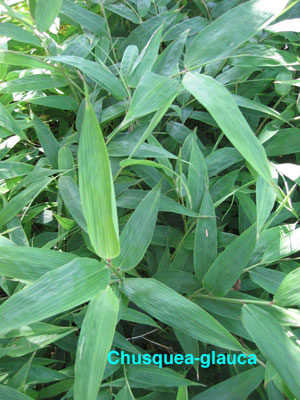
| Chusquea glauca | |
$38 | $62 | $70 |
support. Seeds came from plants collected in Mexico at 6000' elevation. Seedlings are growing
outdoors in Coastal Oregon.
1/2 10' 1/2" 20 F 9-10

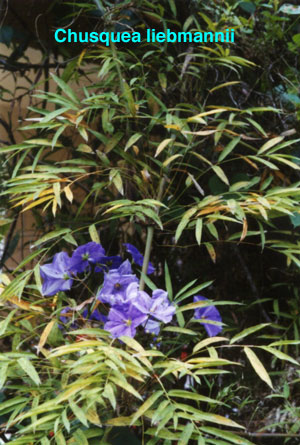
| Chusquea liebmannii | |
$38 | $62 | $70 |
can go to incredible lengths to reach the sunlight through under story plants. It has a bushier habit in
full sun. Good for wall plantings, espallier and a house plant.
sun 33' 1" 32 F 10 C
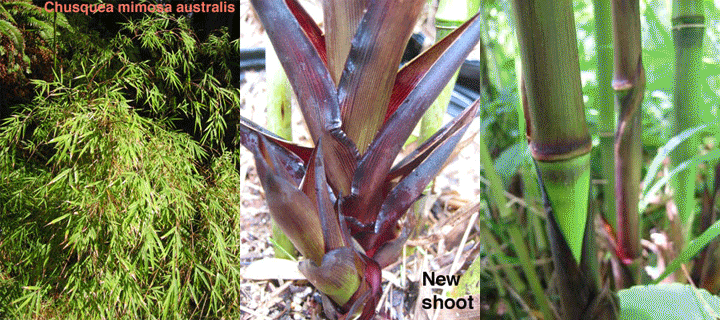
| Chusquea mimosa australis | BIG |
$70 | $100 |
perhaps a bit more, heat tolerance may not be as big a problem for this plant as for some other species
of Chusquea. The small leaves appear in tight whorls on burgandy to pink culms culms and branches.
A personal favorite!
1/2 15' 1" 20 F 9-10 C
| Chusquea muelleri | OUT |
$38 | $62 | $ 70 |
vining species is new to horticulture. It is very happy growing on the Oregon Coast. It is an unusual
Chusquea with a spreading habit. (formerly Ch. sp. 'Chiconquiaco')
sun-1/2 10' 1/2" 20 F 9-10 R
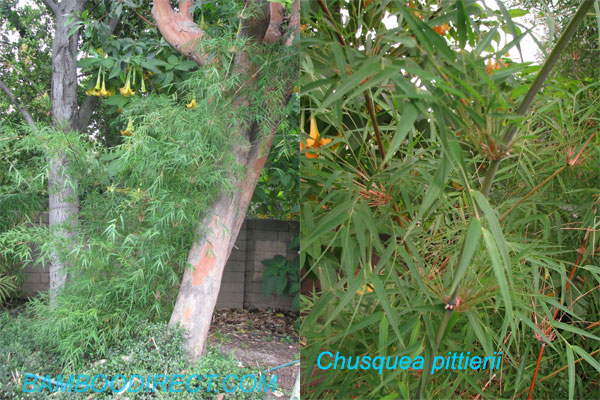
| Chusquea pittieri | FEW |
$38 | $62 |
used as a house plant with nice results.
1/2 50' 2" 24 F 9-10 C
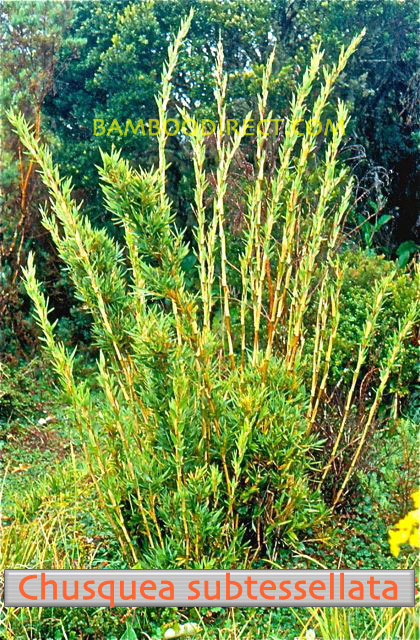
| Chusquea subtessellata | FEW |
$56 | $80 | $110 |
This bamboo has stiff leaves and orange colored culms. New species and has grown well in Oregon.
sun-1/2 6' 1/2" 10 F 8-10 C
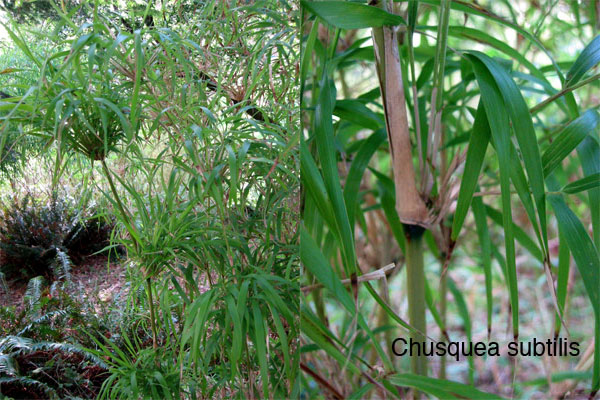
| Chusquea subtilis | FEW |
$80 | $110 |
fine leaf blades on arching and curling downward culms.
1/2 20' 1 1/2" 24 F 9-10 C
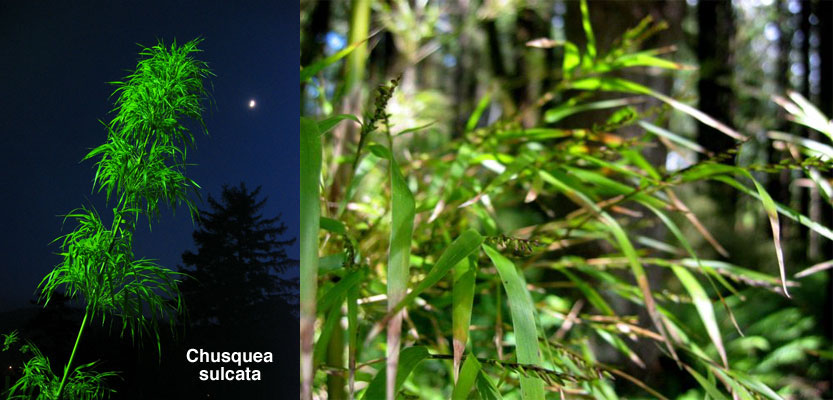
| Chusquea sulcata | OUT |
$56 |
1/2 15' 1" 24 F 9-10 C
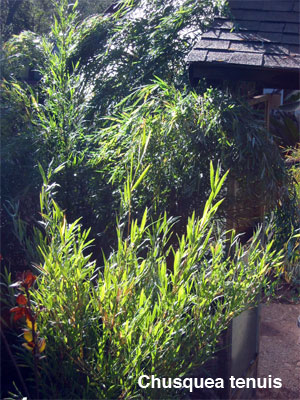
| Chusquea tenuis | BIG |
$42 | $75 |
carries these names: Chusquea acuminata, C. culeou var. tenuis.
Sun-1/2 15' 1" 0 F C
| Chusquea tomentosa | $75 | $100 | $120 |
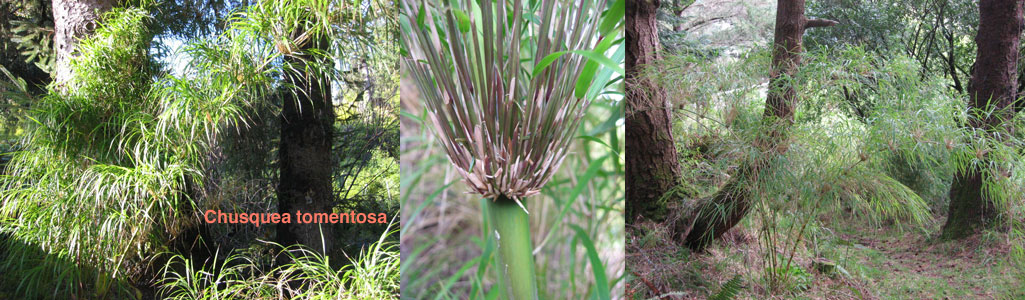
beautiful in pots.
1/2 25' 1 1/2" 26 F 9-10 C
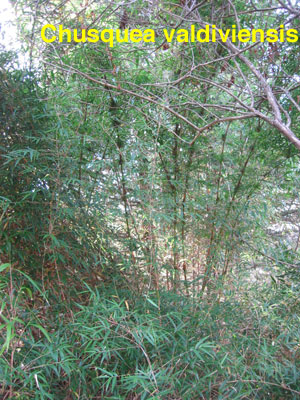
| Chusquea valdiviensis | OUT |
$42 | $120 |
incredible lengths to get to the light at tree top level. Too big for residential gardens.
sun 40' 1.5" 0 F 7-10 C
Drepanostachyum falcatum- BLUE BAMBOO - see Himalayacalamus hookerianus 'Falcatus'
Drepanostachyum glomeratum - see Drepanostachyum sengteeanum(Arundinaria falconeri,
Himalayacalamus falconeri var. glomerata ) -
Drepanostachyum hookerianum - STRIPED HIMALAYAN BAMBOO, CANDY CANE BAMBOO -
see Himalayacalamus falconeri 'Damarapa'
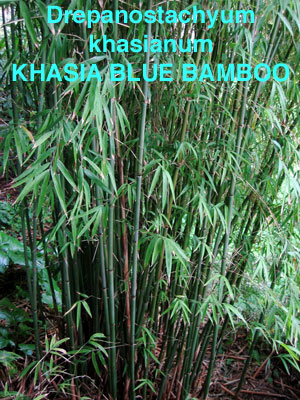
| Drepanostachyum khasianum - KHASIA BAMBOO (flowered 2018-seedlings in 2020) | $32 | $42 | $70 |
The pretty purple noded culms bear big dark green leaves. The new culms are dark green and covered
with white powder. It has bigger leaves than most of the Sino-Himalayans. Takes warmer climates than
most Mountain Bamboo. A classy looking plant.
1/2 16' 3/4" 15 F 9-10 C
| Drepanostachyum khasianum 'Shillong' | FEW |
$62 | $90 |
|
new leaves, richer blue-coloured shoots and purple culm nodes. 'Shillong' differs from the standard form
in its smaller, narrower, thinner leaves, shorter stature, redder leaf sheaths and purple rings both above
and below the nodes. It is a great indoor bamboo.
1/2 12' 5/8" 18 F 9-10 C
| Drepanostachyum
sengteeanum |
|
$32 | $42 | $70 |
glomerata ) - A delicate clumper with airy leaves and easily seen culms. The culms grow in a tight clump
with nodding tips. Culm sheaths are mainly glabrous, with a ring of hairs around the base. It is presently
being described by Dr.Chris Stapleton as a new species in honor of Dr. Seng Tee Lee of Singapore who
funded his post at Kew Gardens. A Himalayan beauty from 1992 seedlings.
1/2 20' 1 1/4" 18 F 8-10 C
| Fargesia apicirubens | |
$32 | $42 | $70 |
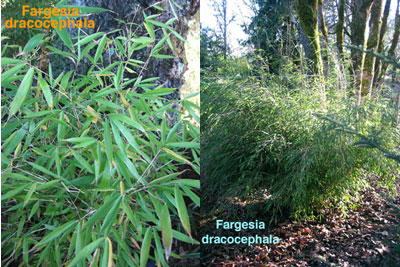
A nice looking bamboo of the Himalayas where it grows at elevations over 6000 feet. Greener and
bigger leaves than most Fargesias. Takes more sun. The name Fargesia dracocephala has been in
question for some time. Recently in 2006 the species was finally identified as Fargesia apicirubens
(Stapleton)
1/2 10' 1/2" -10 F 6-10 C
| Fargesia apicirubens 'WHITE DRAGON' | OUT |
$38 | $56 |
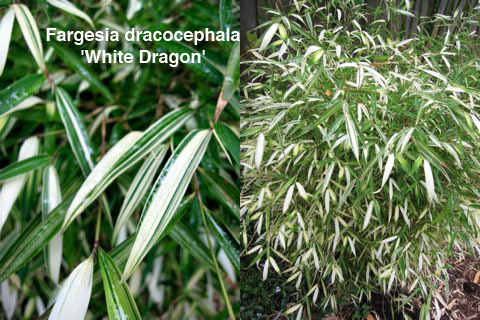
A selected seedling with white varigation on he leaves. The only variegated Fargesia.
1/2 8' 1/2" -10 F 6-10 C
Fargesia crassinodus-see Thamnocalamus crassinodus
| Fargesia denudata | |
$32 | $42 | $70 |
1/2 16' 1/2" 0 F 7-10 C
| Fargesia dracocephala 'Rufa' | |
$32 | $42 | $70 |
1/2 10' 1/2" -5 F 6-10 C

| Fargesia murielae - UMBRELLA BAMBOO | |
$26 | $38 | $62 |
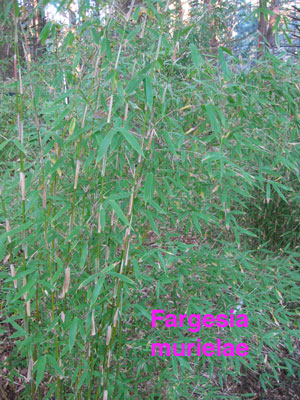
cold winter regions and along the West Coast.
1/2 15' 1/2" -20 F 5-10 C
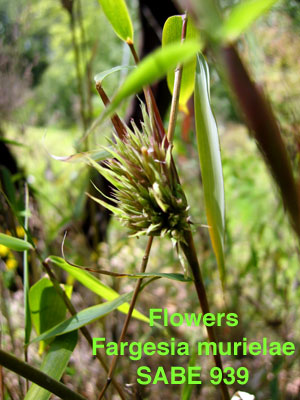
| Fargesia murielae "SABE 939" | |
$32 | $42 | $70 |
significantly thicker than the standard form. Reported to be a different clone from the Sino-Himalayan
Expedition of 1980.
1/2 15' 1/2" -20 F 5-10
| Fargesia murielae 'Sukoshi' |
|
$38 | |
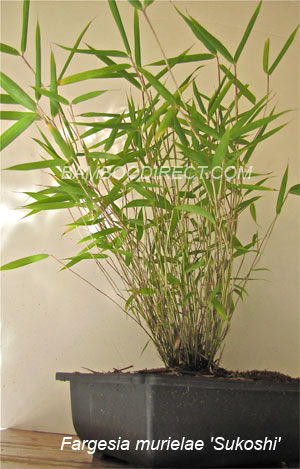
1/2 3' 1/2" -20 F 5-10 C
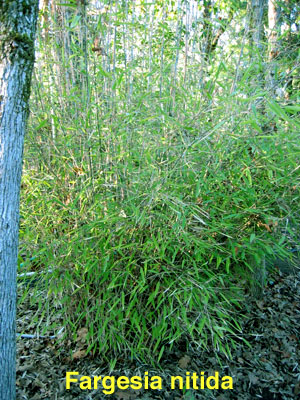
| Fargesia nitida - FOUNTAIN BAMBOO | |
$32 | $42 |
powder. NEW SEEDLINGS
1/2 12' 1/2" -20 F 5-10 C

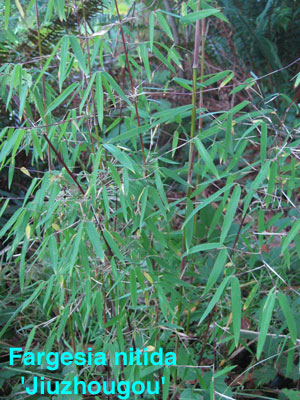
| Fargesia nitida 'Jiuzhaigou' | |
$48 | $66 | $88 |
1/2 12' 1/2" -20 F 5-10 C
| Fargesia nitida 'Jiuzhaigou 2' | |
$38 | $62 |
1/2 12' .5" -20 F 5-10 C
| Fargesia nitida 'Jiuzhaigou 9' | Some | $48 | $66 |
1/2 12' 1/2" -20 F 5-10 C
| Fargesia nitida 'Jiuzhaigou 10' | Some | $48 | $66 |
1/2 12' 1/2" -20 F 5-10 C
| Fargesia nitida 'Jiuzhaigou Genf' | |
$48 | $66 | $88 |
1/2 12' 1/2" -20 F 5-10 C
| Fargesia nitida 'Nymphenburg' (seedlings) | $32 | $42 | $70 |
1/2 12' 1/2" -20 F 5-10
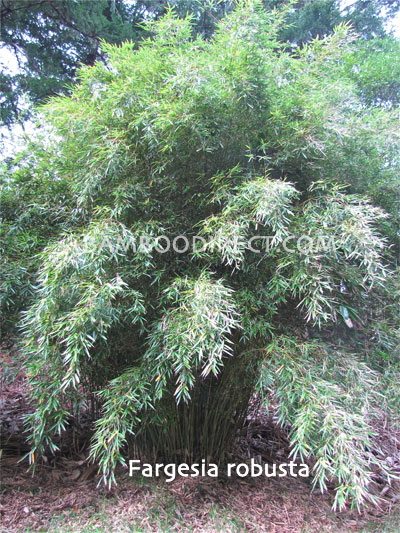
| Fargesia robusta | |
$32 | $42 | $70 | |
leaves. Takes full sun better than other Himalayans.
1/2 16' 1" -5 F 6-10 C
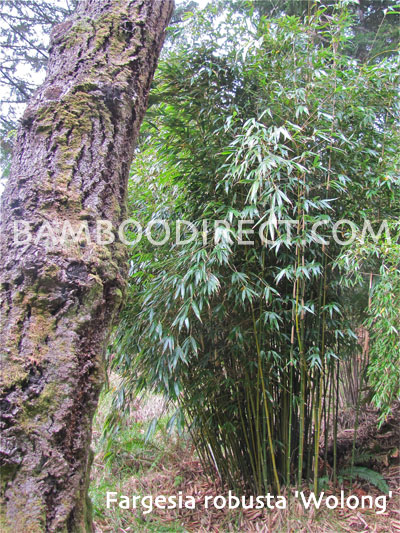
| Fargesia robusta 'Wolong' | $32 | $42 | $70 | |
specimen.
1/2 16' 1" -5 F 6-10 C

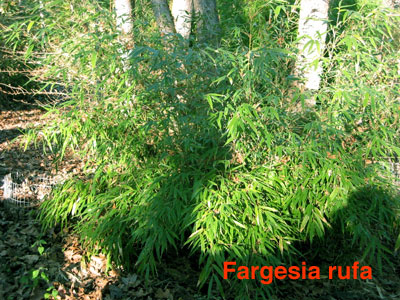
| Fargesia rufa (See F. dracocephala 'Rufa' | |
$32 | $42 | $70 |
1/2 10' 1/2" -5 F 6-10 C
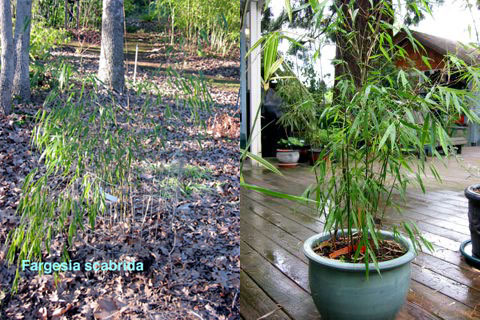
| Fargesia sp. 'Scabrida' | BIG |
$32 | $42 | $70 |
sheaths. Fast grower
1/2 14' 1/2" 0 F 7-10 C
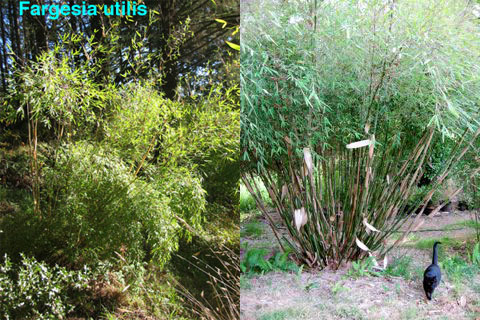
| Fargesia utilis (Borinda utlilis) | BIG |
$32 | $42 | $70 |
1/2 18' 3/4" 0 F 7-10 C

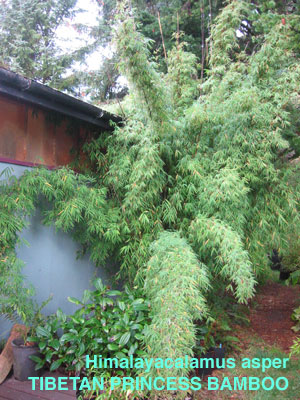
| Himalayacalamus asper | $32 | $42 | $70 |
Thin dark burgundy culms ascend to whorls of long narrow delicate leaves. The new shoots grow
upright. Older, leaved culms may hang out needing staking or pruning.
1/2 20' 1/2" 15 F 8-10 C
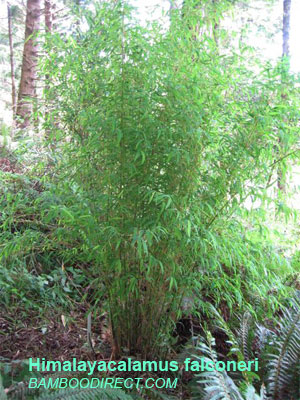
| Himalayacalamus falconeri | |
$32 | $42 | $70 |
the Candy Cane variety. Excellent form for the landscape. Most erect form than other Mtn. bamboos.
1/2 20' 1" 15 F 8-10 C
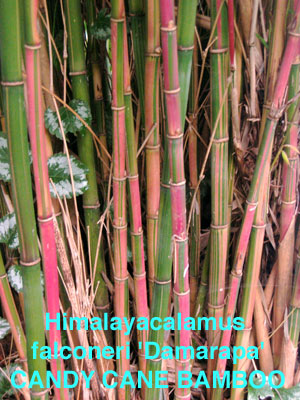
| Himalayacalamus falconeri 'Damarapa' | |
$32 | $42 | $70 |
A Himalayan bamboo of great beauty. Slender branched masses of leaves born on culms striped in
yellow, green and pink. An occasional cream stripe on the leaves. Slimy culm sheaths when raining
or damp in the morning. Most erect form than other Mtn. bamboos.
1/2 20' 1" 15 F 8-10 C
| Himalayacalamus hookerianus 'Blue Bamboo' | $32 | $42 | $70 |
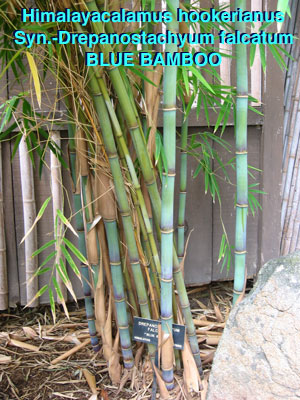
The new culms have a blue powder that makes them almost look "blue" from a distance. As they age
the culm colors vary from burgandy, terra cotta to green. Used in basket weaving and as animal fodder
in the Himalayas. Seedlings only. Mother plants flowered and died.
1/2 20' 1" 20 F 9-10 C
| Himalayacalamus hookerianus 'Teague's Blue' SEEDLINGS | FEW |
$56 | $95 | $120 | |
This cultivar came from a seedling from the Bill Teague collection. It has brighter colored
culms. (Flowered beginning 2014) NEW SEEDLINGS
1/2 25' 1" 20 F 9-10 C
| Himalayacalamus hookerianus 'Betty Shor' SELECTED FROM ONE SEEDLING | FEW |
$56 | $95 | $120 | |

This cultivar came from a seedling from the Betty and George Shor's house in La Jolla, CA.
It has brighter blue colored culms and purple internodes. (Flowered 2004)
1/2 25' 1" 20 F 9-10 C
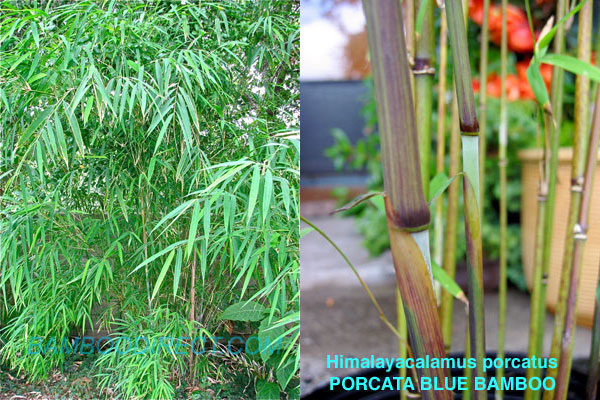
| Himalayacalamus porcatus - PORCATA BLUE BAMBOO | BIG |
$32 | $42 | $70 |
complemented by tight clumping habit. The culms have a finely ridged internode. Simiar in habit to
H. hookerianus.
1/2 20' 1" 20 F 9-10 C
"Neomicrocalamus microphyllus" see Himalayacalamus asper
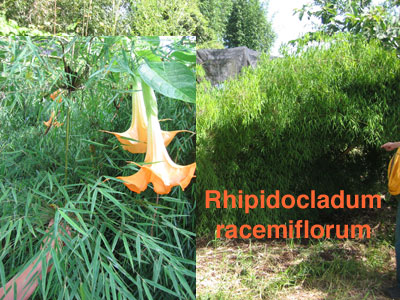
| Rhipidocladum racemiflorum | Few |
$70 | $100 |
numerous branches form whorls of pompoms well spaced on the culms. In full sun it may be covered
with minute leaves. In shade the pompom effect is more apparent. (Flowering 2015)
1/2 20' 3/4" 25 F 9-10 C
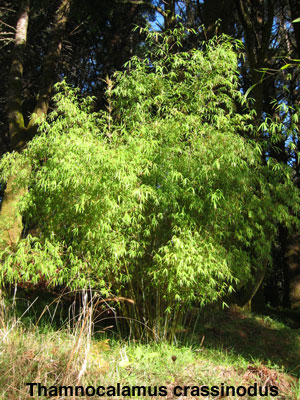
| Thamnocalamus crassinodus | BIG |
$32 | $42 | $70 |
1/2 18' 1" 10 F 7-10 C
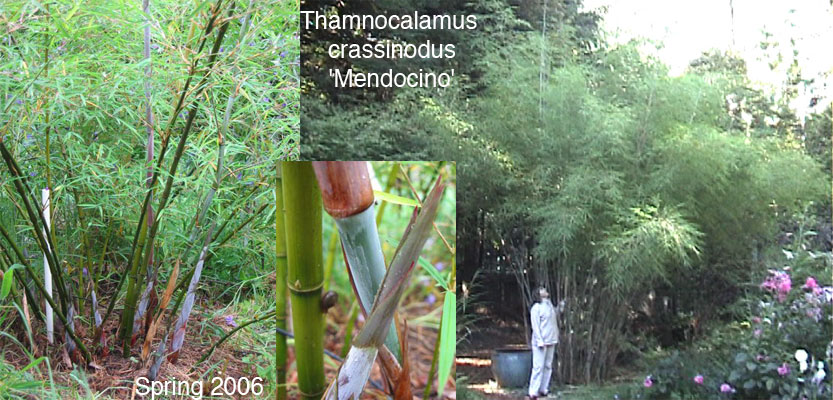
| Thamnocalamus crassinodus 'Mendocino' |
$55 | $65 | $100 |
blue-green leaves adorn culms with exagerated knobby nodes. Fast grower!
1/2 18' 1" 10 F 7-10 C

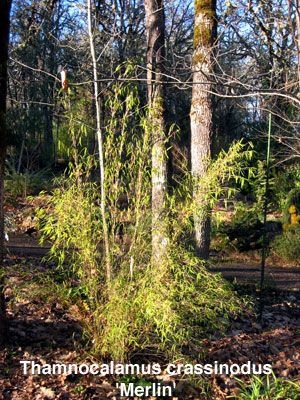
| Thamnocalamus crassinodus 'Merlin' | BIG |
$32 | $42 | $70 |
Himalayas. Fast grower. I like it.
1/2 18' 1" 10 F 7-10 C

| Thamnocalamus tessellatus - Bergbamboes | |
$32 | $42 | $70 |
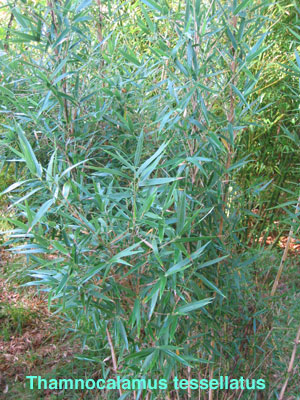
spreading clump.
1/2 16' 1" 0 F 7-10 C
| Yushania boliana (syn. Borinda boliana) | |
$32 | $42 | $70 |
in China. It came here via the Fuji Bamboo Gardens in Japan. Has pale blue culms. Reaches large size
quickly. It has become a personal favorite!
1/2 18' 3/4" 10 F 7-10 C









no photo


no photo
no photo